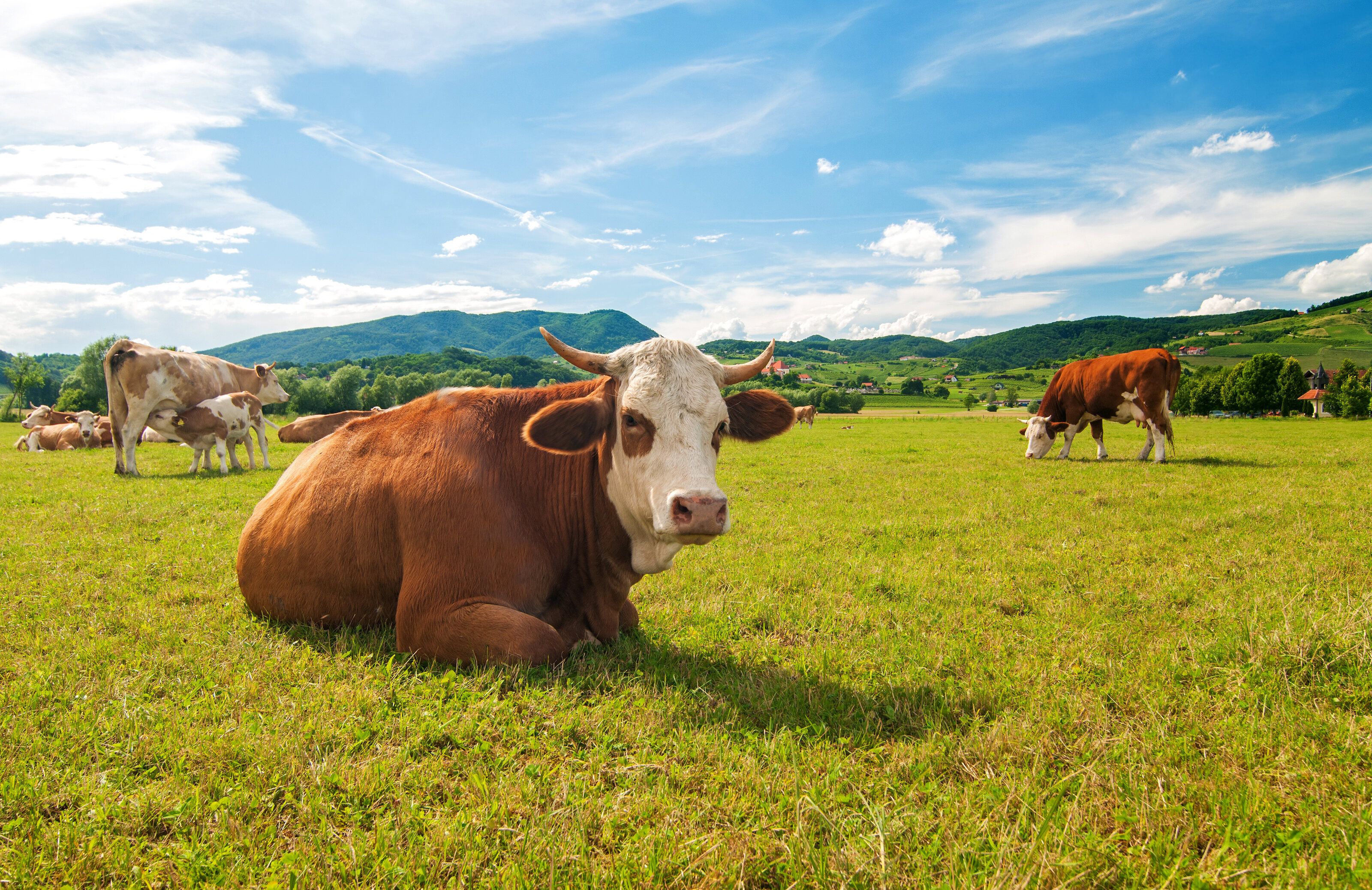
A cow is pregnant for about 283 days: nine months and ten days from mating or insemination. A sow carries for 114 days, a ewe 147 and a goat 150; the table below has every farm species.
Gestation is the time between the mating that gets the animal pregnant and the birth. Knowing it ahead of time helps with three things: getting the birthing area ready, drying off a dairy cow on time and having the vet on hand if something goes wrong.
Gestation days by species
These are averages. Every breed, every mother and every birth shifts the date by a few days.
| Species | Gestation days | Roughly |
|---|---|---|
| Cow | 283 | 9 months and 10 days |
| Sow | 114 | 3 months, 3 weeks and 3 days |
| Ewe | 147 | 5 months |
| Goat | 150 | 5 months |
| Mare | 340 | 11 months |
| Llama and alpaca | 345 | 11 and a half months |
| Rabbit doe | 31 | 1 month |
How to work out the due date
Add the days in the table to the date of mating or insemination. If there were several matings, count from the last one; if you do not know which one took, work it out from both the first and the last and keep an eye on the animal across that range.
The due date calculator does the sum for you and tells you how many days are left.
Why the date moves
- Breed. In cattle, zebu breeds usually carry a few days longer than European dairy breeds.
- Number of young. Ewes and goats carrying twins tend to give birth earlier.
- Sex of the calf. In cows, bull calves are usually born one or two days later.
- Age and condition of the mother. A thin mother or a first-timer may come early.
Cow gestation by breed
The 283 days are an average. As a guide from extension manuals, European dairy breeds (Holstein, Jersey) run about 279 to 280 days, European beef breeds (Angus, Hereford) 281 to 285, and zebu breeds (Brahman, Nelore, Gyr) can go past 290. A crossbred cow falls between the two breeds. A week either side of the calculated date is normal.
How often a cow calves
The goal on a farm is one calf per cow per year, a calving every 12 months, 13 at most. Since pregnancy already takes nine months and ten days, for a 12-month interval the cow has to get pregnant again about 80 to 85 days after calving. If your cows calve every 15 or 18 months, each cow gives you fewer calves in her life: check feeding after calving, body condition and the bull or the insemination.
Signs a cow is about to calve
In the last days before calving you will see:
- The udder fills and the teats go tight.
- The vulva swells and a clear mucus may show.
- The ligaments either side of the tail relax and the tailhead looks sunken.
- The cow leaves the herd, lies down and gets up often and stops eating.
How long calving takes
Once hard straining starts and the water bag or the feet show, a mature cow usually calves within about 30 minutes and a first-calf heifer within about an hour. You should see progress every 15 to 20 minutes. Normally the two front feet come first with the head resting on them.
Check her or call the vet if a cow makes no progress after 30 minutes of hard straining (a heifer, after an hour), if the hind feet or a single foot show, if you see the head without the feet, or if the cow stops straining and is weak. A difficult calving handled in time saves both the cow and the calf.
What to prepare before the birth
- Dairy cows: dry them off about 60 days before calving so the udder can rest.
- Sows: move them to a clean farrowing pen a week before.
- All animals: a dry, quiet place, clean water and the vet’s number to hand. Watch the mother more closely from one or two weeks before the date.
Put the date on your phone
In the Ganaderos app you record the mating or insemination and the expected due date appears automatically, using the same days as this table. Breeding records are part of the Pro plan. Create a reminder for that date and the alert reaches your phone a day before.