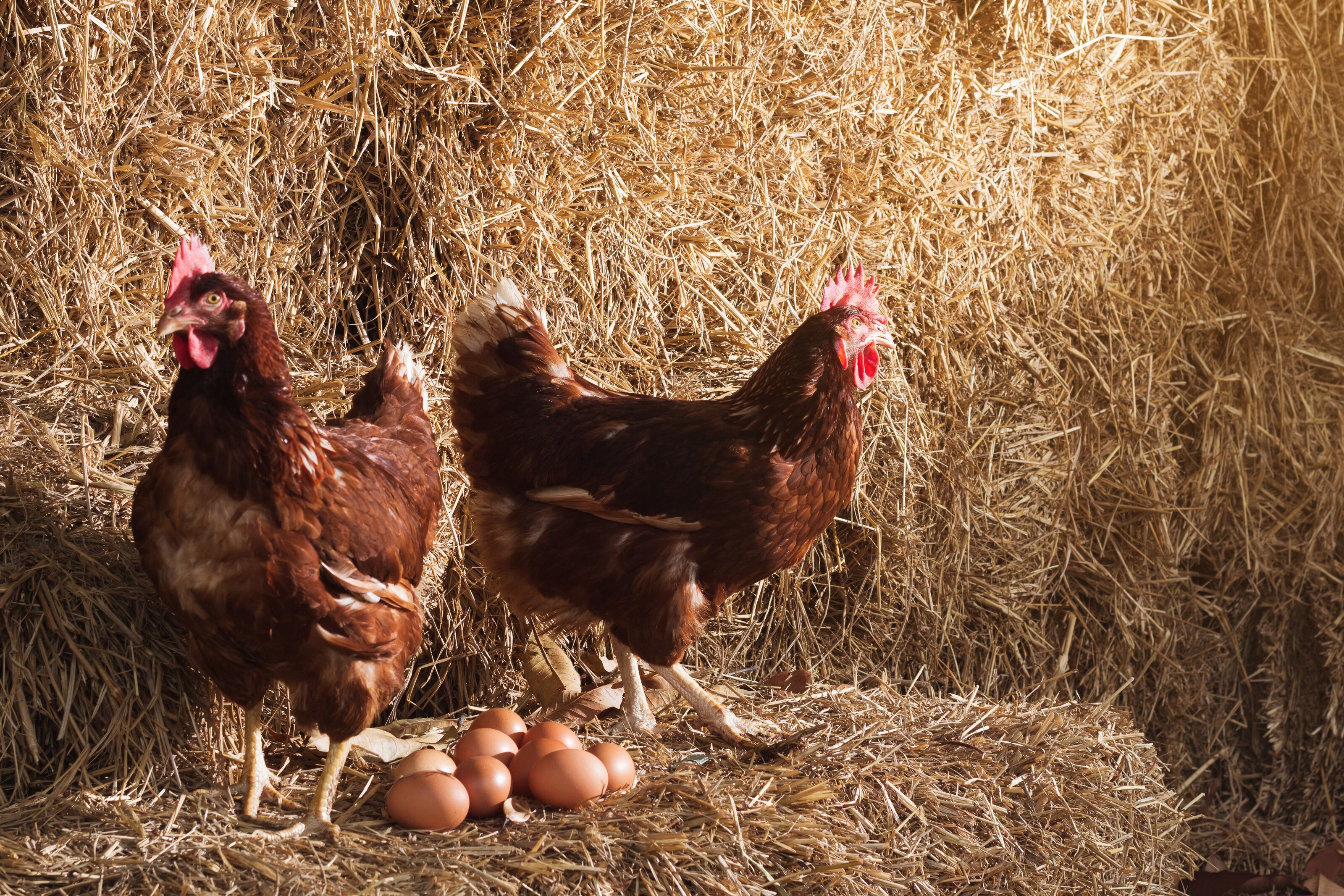
A hen does not lay an egg every day of her life. Laying rises, reaches a peak and then drops off little by little. Knowing where your flock is on that curve tells you whether it is doing well or something is wrong.
Laying by age
- Start, from 18 to 22 weeks. Commercial layers begin to lay. The first eggs are small.
- Peak, a few weeks later. A good commercial flock reaches 85 to 95 % lay: out of every 100 hens, 85 to 95 lay each day.
- Slow decline. After the peak, laying drops a little each week. The eggs get bigger, but there are fewer of them.
- After 70 to 80 weeks of age. The flock usually no longer pays for its feed, and many producers replace it.
Over a year, a good commercial layer can pass 250 eggs. Local or backyard hens lay quite a lot fewer, but they forage for their own food and are hardier.
What makes a hen stop laying
- Age. Each hen lays less as the years go by.
- Moulting. The hen replaces her feathers and stops laying for a few weeks. It is natural.
- Light. Hens lay according to the hours of daylight. When days are short, laying drops. Many producers add extra light to reach about 14 to 16 hours.
- Stress. Strong heat, noise, predators, moving pens or too many hens in too little space.
- Feed and water. A layer eats about 115 g a day (110 to 120 g). If the feed is low in protein or calcium, or water runs out even for one day, laying falls.
- Illness. Parasites or a respiratory disease cut laying suddenly. If it drops for no clear reason, call the vet.
Feed per dozen
This is the best way to know whether your flock is efficient. Divide the kilos of feed by the dozens of eggs you collected.
At 115 g per hen per day and 90 % lay, each dozen costs about 1.5 kg of feed. At 70 % lay, the same dozen already costs almost 2 kg. A good commercial layer sits between 1.5 and 1.8 kg per dozen. If you go above 2 kg, look for the problem: old hens, wasted feed or hens that are not laying.
The laying hen profit calculator works out the feed per dozen, the cost per egg and the month’s profit with your own prices.
Record the eggs every day
In the Ganaderos app you log the day’s eggs in seconds and see the total for today and for the week (the month, on the Pro plan). If laying drops, you notice straight away. You also record feed costs and egg sales, and see the profit for each month.